Aurora Design Notes
This page covers construction notes, variations, and the story behind the design.
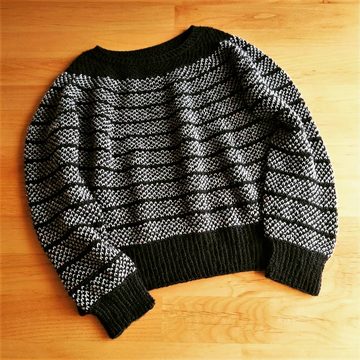
Construction
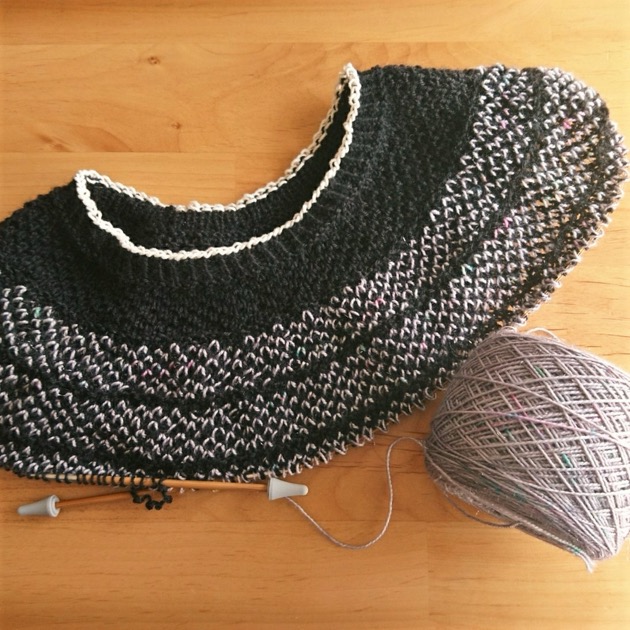
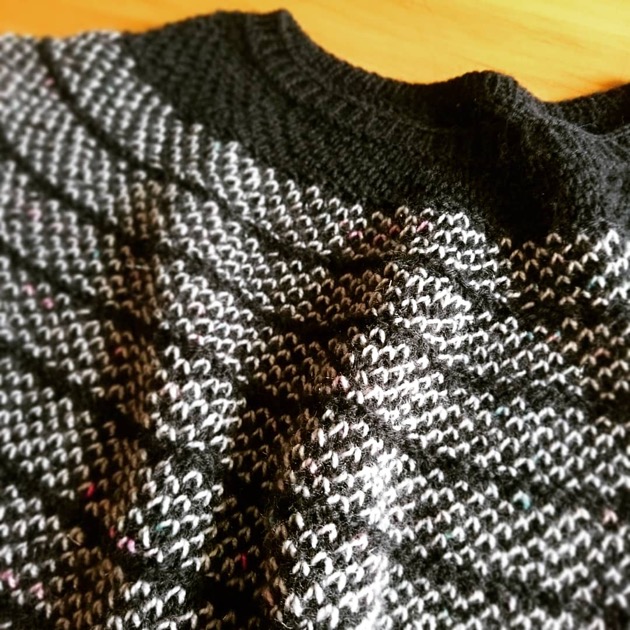
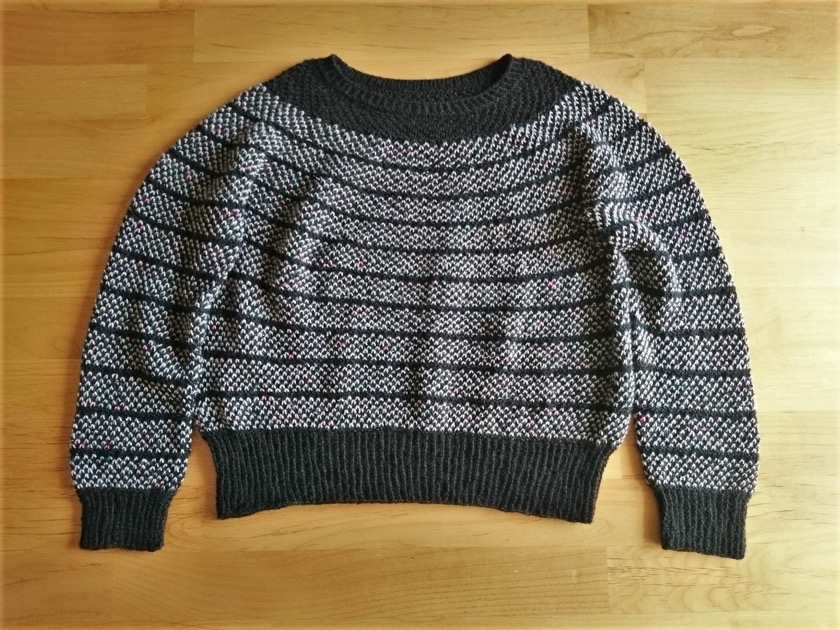
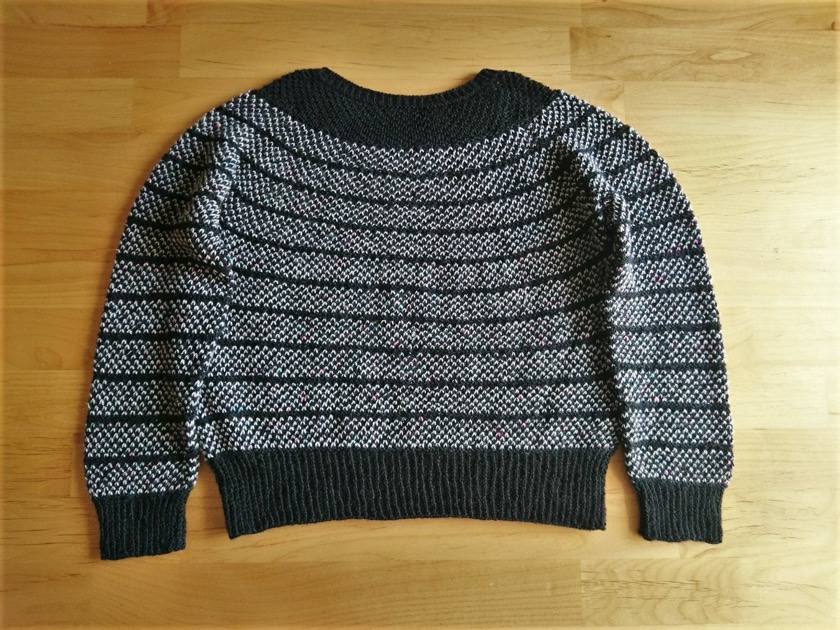
Aurora is a top-down seamless sweater. The brioche pattern runs throughout the entire piece, but the chart is made up of knit stitches only with no increases or decreases, making it a straightforward pattern to follow. If you have experience knitting a typical top-down seamless sweater, you should have no trouble working through this pattern even if brioche is new to you.
Neck
Using the smaller needles and MC, work the ribbing. A Long Tail Cast On works perfectly fine, but if you use a Crocheted Provisional Cast On, you will be able to adjust how wide the neckline opens by controlling the tension of your bind-off at the end.
Yoke
Switch to the larger needles for the yoke. Begin by working German Short Rows in MC only to create a front-to-back neckline difference. Although the short row section includes the brioche pattern, working with a single color keeps things straightforward.
Once the short rows are complete, the two-color brioche pattern begins. MC and CC are worked in alternating rows, and while the fabric reads as wide stripes from a distance, there is no need to cut the yarn. Increases are worked in the MC-only stripe sections between the chart repeats. These sections are worked in plain knit and purl stitches rather than brioche, making it easy to keep track of your increases without disrupting the pattern.
Body
After completing the yoke, place the sleeve stitches on holders to separate the body and sleeves. Cast on stitches at the underarms, join to work in the round, and continue working the same brioche pattern as the yoke down to the hem. Finish with a ribbed hem in MC and bind off.
Sleeves
Return the held stitches to the needles and pick up stitches from the underarm to join in the round. Work the same brioche pattern as the body, gradually decreasing to shape the sleeve as you go. Finish with a ribbed cuff worked the same way as the neck.
Techniques
The following techniques used in this pattern are covered in the Tips video. If any of them are new to you, feel free to use it as a reference.
For German Short Rows
- MDS / Make Double Stitch (Knit & Purl)
- KDS / Knit Double Stitch
- PDS / Purl Double Stitch
For yoke increases
- Kfb / Knit into front and back of stitch
For brioche pattern
- Sl1yo / Slip 1 yarn over
- Brk / Brioche knit
For underarm
- Loop Cast On
- Pick up and knit
For joining yarn
- Splice Join — by felting the ends together
Variations
Variegated yarn
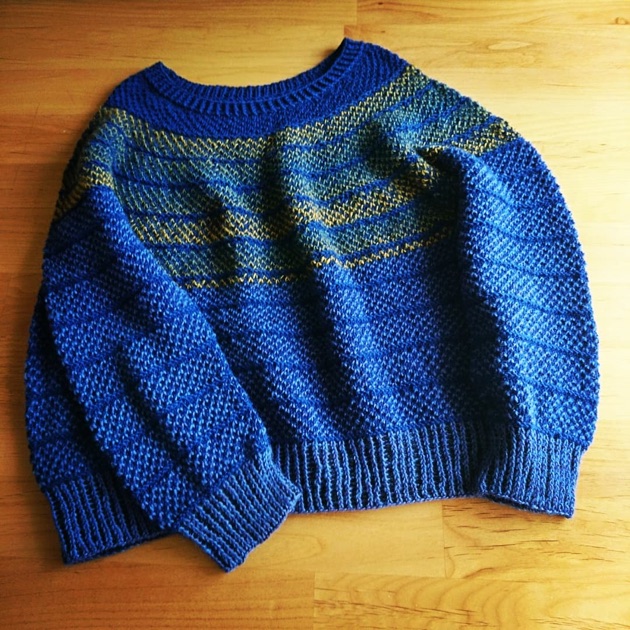
This is the original prototype of Aurora. A variegated yarn is used for CC, so the color shifts gradually across the stripes. Variegated yarns work beautifully with brioche, and the texture of the stitch pattern makes the color transitions appear even more dimensional.
Mohair yarn
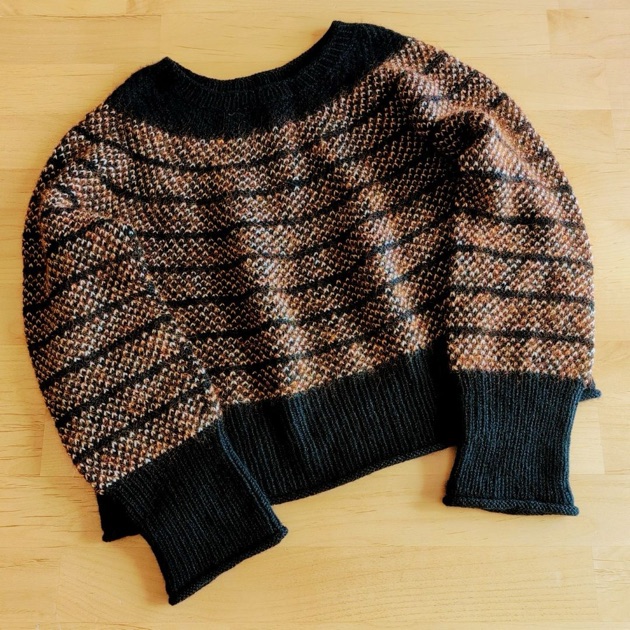
In this version, CC is worked with mohair and a fine yarn held together. The halo of the mohair softens the brioche pattern, giving the sweater a gentle, cozy feel. Experimenting with different color combinations of the two yarns opens up endless possibilities.
Cotton yarn, short sleeve variation
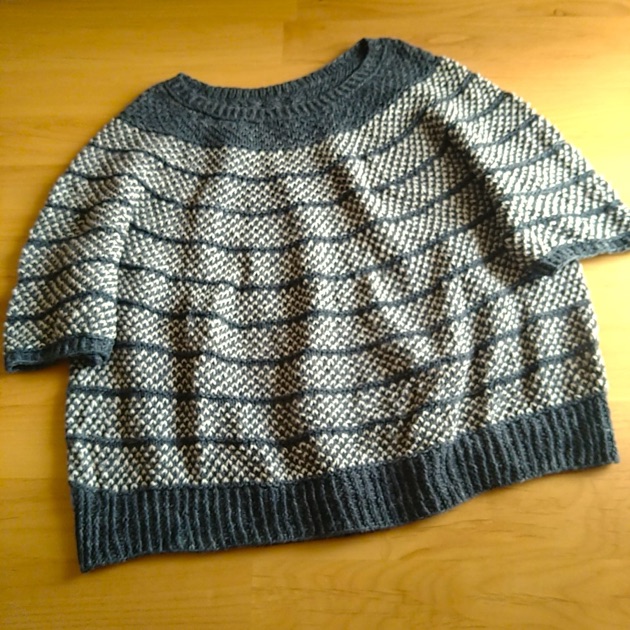
This version is knitted in cotton yarn with the sleeves shortened. The result is a lighter, breezier fabric compared to wool, making it a great option for warmer seasons. Adjusting the sleeve length is simply a matter of adding or removing stripes.
Held strands
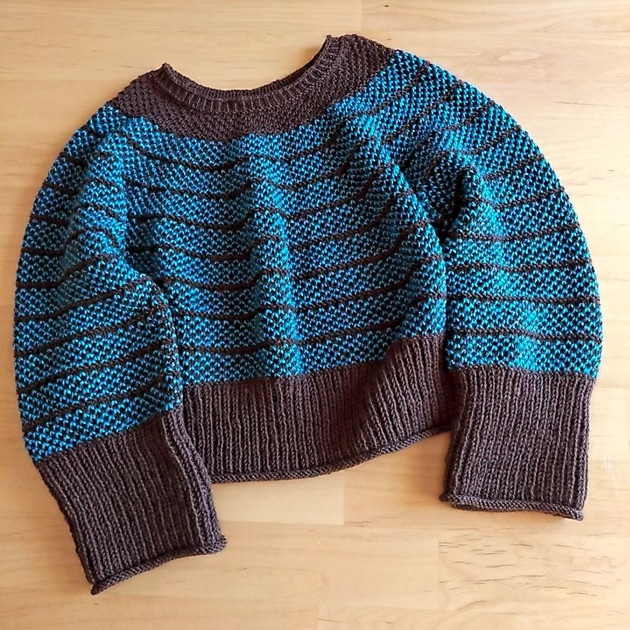
CC in this version is made up of several fine yarns held together. While it reads as a single color, the way light catches the different strands gives the fabric a subtle complexity and depth.
More ideas
CC only requires one 100g skein of a standard fingering weight yarn, so it is a great opportunity to use a special hand-dyed skein or any unique yarn you have been saving. You could also switch the CC color with each stripe, or use up leftover yarns from your stash for a more playful look. Choosing a lighter color for MC will give the sweater a completely different feel. Sleeve length and body length can both be adjusted simply by adding or removing stripes.
Behind the Design
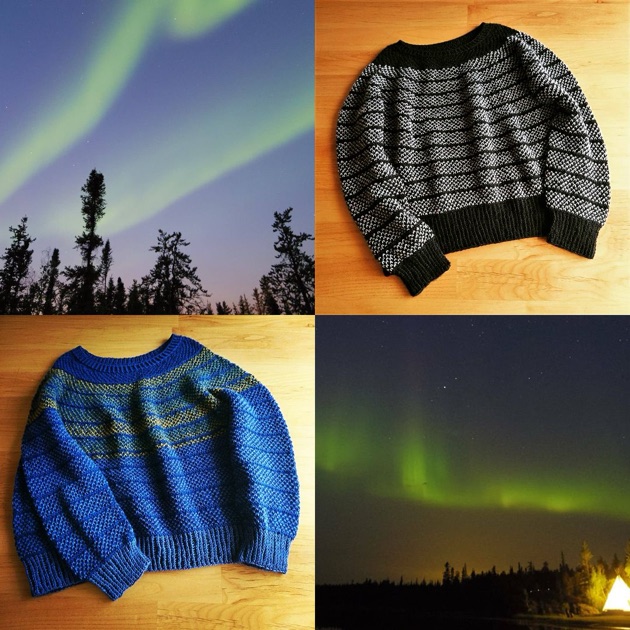
The name Aurora comes from a trip to Yellowknife, Canada, in the summer of 2013.
Yellowknife is well known as one of the best places in the world to see the northern lights, and one of its great appeals is that you can enjoy the aurora even in summer, without having to brave extreme cold. The viewing facilities were well set up, with tipis to relax in while waiting for the lights to appear, making the whole experience very comfortable. We had three nights with a chance to see the aurora, and although clouds got in the way on one of them, we were lucky enough to catch some beautiful displays. It also happened to coincide with the Perseid meteor shower, so seeing shooting stars alongside the aurora was a wonderful bonus.
The name of this sweater actually came from a prototype I knitted before the pattern was finalized. I used a variegated yarn that shifted from blue to yellow, and as I looked at the finished piece, a photo I had taken of the aurora in Yellowknife suddenly came to mind. Something about the way the colors flowed across the fabric reminded me of that night sky.
For the finished pattern, I chose yarns that reflected the mood of that photo. MC is black, inspired by the dark silhouettes of the forest trees that appear in the image. For CC, I chose a hand-dyed yarn in a soft blue-purple shade containing stellina, a fiber that adds a subtle shimmer. The natural variation of the hand-dyed color captures the shifting glow of the aurora, while the sparkle of the stellina represents the stars scattered across the night sky. It feels like the atmosphere of that photo translated directly into yarn. The colorway is completely different from the variegated yarn in the prototype, but in their own ways, both feel like reflections of that aurora night.