Fukiya Design Notes
This page covers how the pattern is worked, along with other notes about the design.
Construction
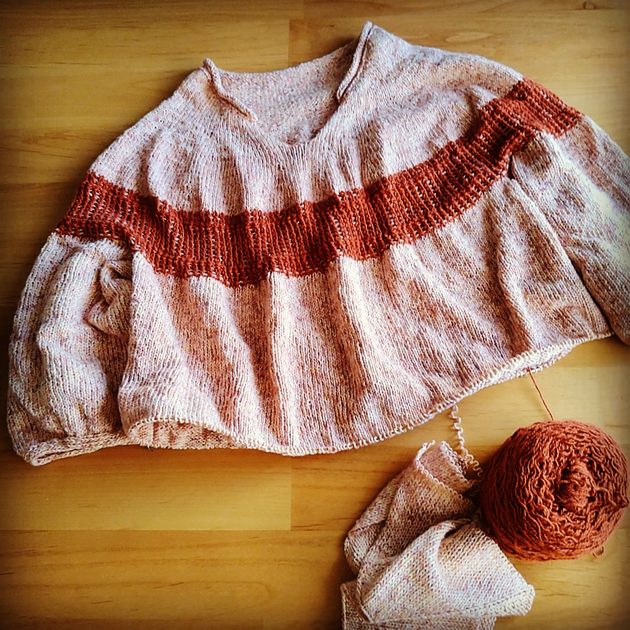
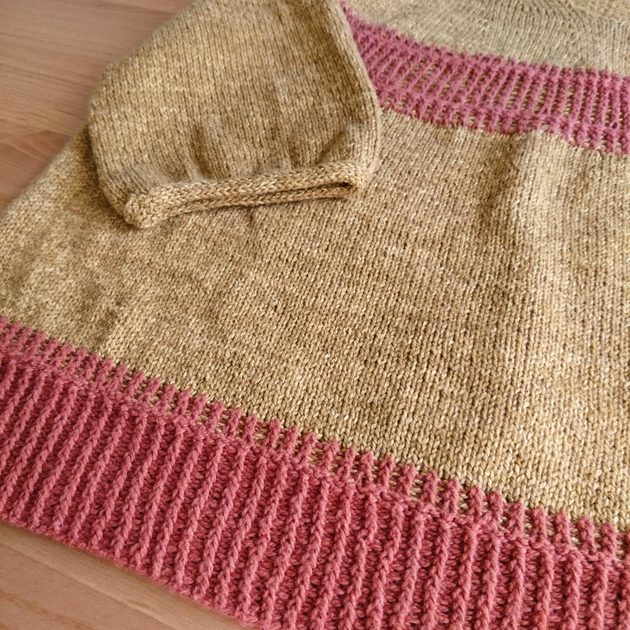
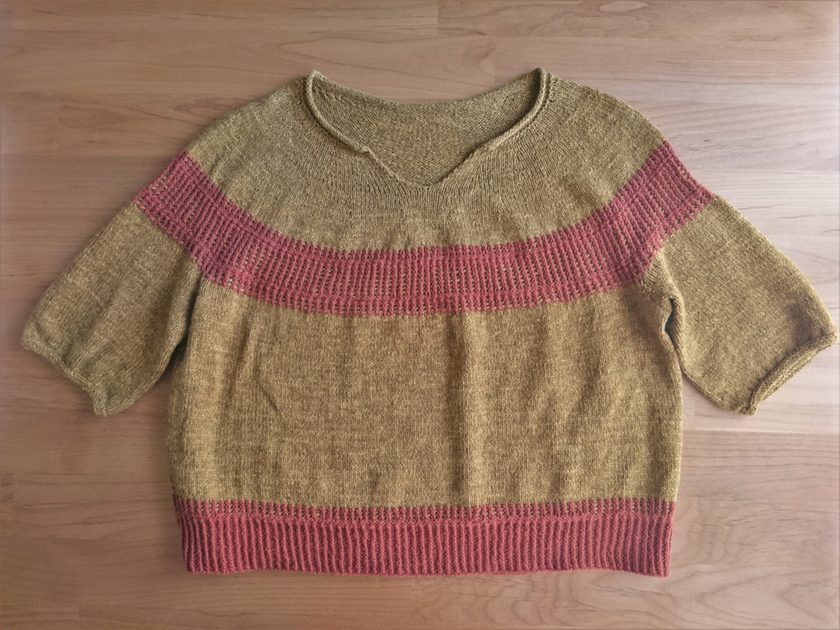
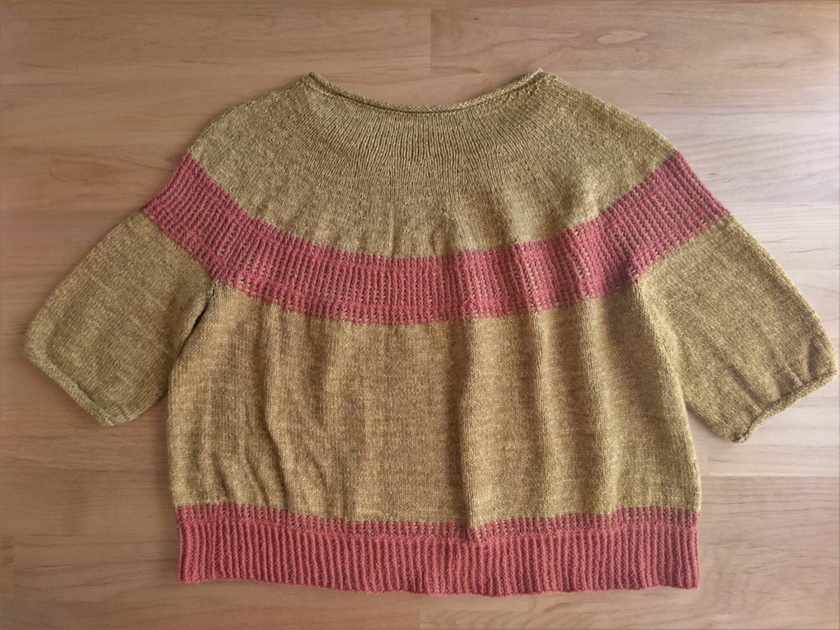
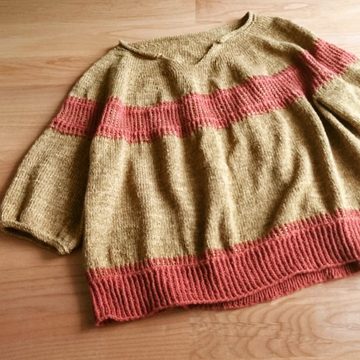
Fukiya is a top-down, seamless pullover featuring a small slit at the neckline and a distinctive lattice pattern on the yoke and hem as design highlights. While it may look intricate at first glance, it is actually a simple repetition of slipped stitches. Because it combines basic techniques, anyone who has experience knitting top-down garments should be able to work through it smoothly.
Neck
Using the smallest needles and MC, start knitting from the neckline. Cast on using the long-tail method and work back and forth to create the edge of the neckline. Working this section in stockinette stitch allows the edge to curl outward naturally upon completion, creating a lovely, nuanced neckline.
Yoke
Switch to the medium-sized needles and begin with German Short Rows using only MC to create a shoulder slope that lowers the back. This difference between the front and back significantly improves the fit when worn. After completing the short rows, continue working back and forth while regularly increasing to form an elegant slit at the front. Once the slit is completed, join the bottom of the slit to work in the round, and continue increasing to expand the yoke systematically. Once MC section of the yoke is finished just before the lattice pattern, break MC yarn and move the beginning of the round (BOR) from the center front to the less visible back left. Switch to the largest needles to begin the colorwork section, which is the main feature of this pattern, incorporating CC. Increases are worked in MC sections immediately before and after the pattern, allowing you to advance without disrupting the beautiful lattice design. Additionally, because MC and CC are worked alternately row by row, there is no need to carry or cut the yarn within the pattern. Once the lattice pattern is finished, break CC yarn, switch back to the medium-sized needles, and complete the rest of the yoke.
Body
Once the yoke is finished, place the sleeve stitches on holders to separate the body and sleeves. Use a backward loop cast-on to add new stitches at the underarms, join in the round, and work straight down toward the hem in stockinette stitch.
Hem
After working the body to the desired length, begin the hem colorwork. Do not change needles here; continue using the same needles used for the body. Unlike the yoke, the lattice pattern on the hem features two-color colorwork only at the top, while the lower section consists entirely of CC. Therefore, break MC yarn partway through, work a decrease row immediately after, and then continue knitting the rest of the lattice pattern using only CC. Finally, bind off in pattern to match the design.
Sleeves
Return the held sleeve stitches to the medium-sized needles and pick up new stitches from the underarm to join in the round. Work straight toward the cuff using MC, and decrease sharply on the round just before the cuff to create a lovely silhouette reminiscent of puff sleeves. Finally, work an I-cord Bind Off to create a substantial, well-defined edge and close the stitches neatly.
Variations
3/4 Length Sleeves & Long Body
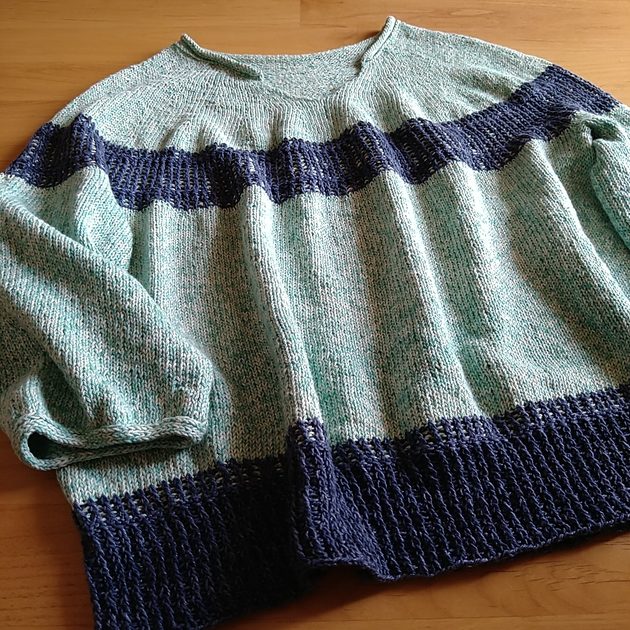
Since the sleeves and body are worked in straightforward stockinette stitch with no increases or decreases, you can easily adjust them to your preferred length.
More ideas
This pattern would also look wonderful knit in a wool or other winter-weight fingering to heavy-fingering yarn. For a cozy cold-weather version, you can extend the sleeves to full length and add the hem's lattice motif to the cuffs.
Behind the Design
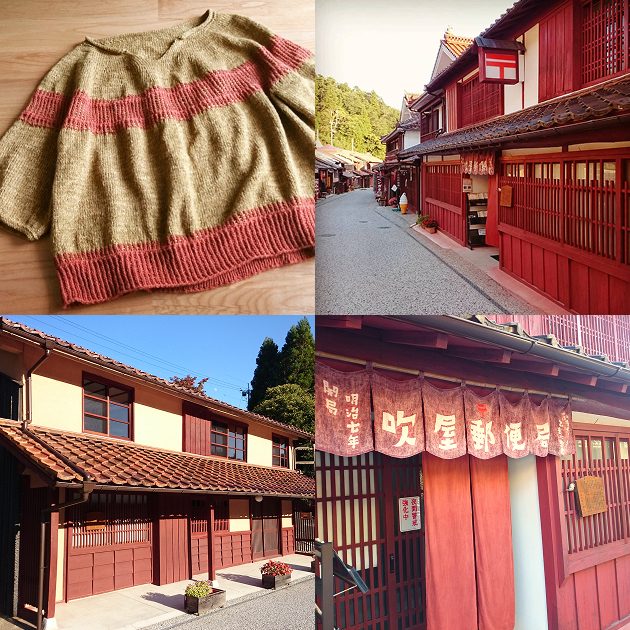
The name of this pattern, "Fukiya," is inspired by a historic, beautiful mountain town located in Takahashi City, Okayama Prefecture, Japan.
Fukiya once flourished as a prominent producer of Bengara (a traditional red iron oxide pigment). The town is renowned for its breathtaking, unified streetscape, where centuries-old wooden townhouses (Machiya) feature distinct brownish-red copper roof tiles and walls painted in rich Bengara red. This stunning village was deliberately planned and crafted by master artisans to harmonize with and protect the surrounding natural environment, and it is now protected as a national cultural heritage site.
The linear colorwork patterns on the yoke and hem of this pullover are inspired by the beautiful lattice windows and screens (Koshido) characteristic of these traditional townhouses. Worked in a rich hue that evokes the historic Bengara red of Fukiya, this design brings a piece of Japanese architectural heritage into a modern, wearable garment.
Photos & Projects
View detailed photos and projects by other knitters.
Login to Ravelry to view other knitters' projects.
View on Ravelry